

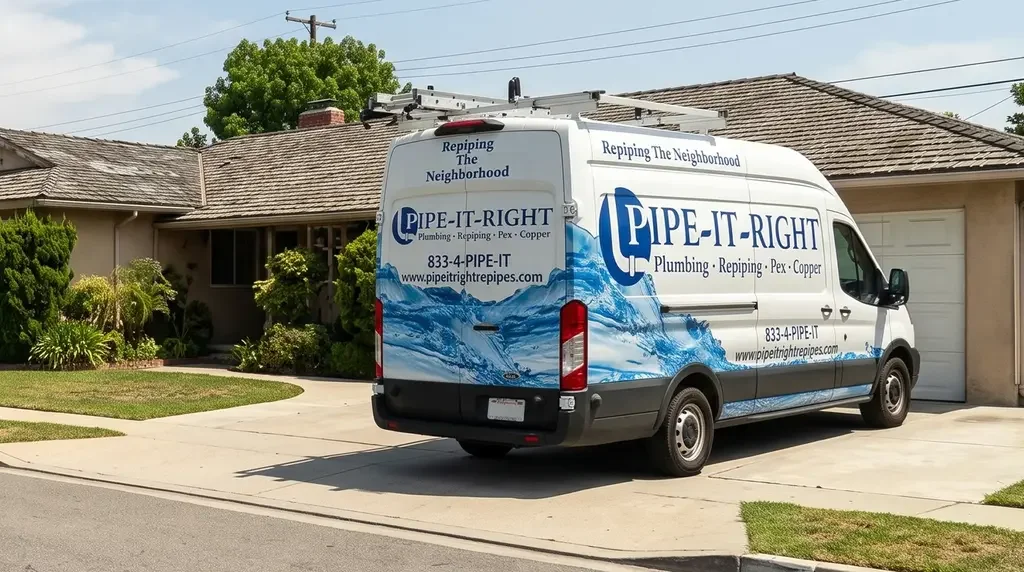
Nobody wants to dig up their yard to fix a sewer line. The good news is that most of the time, you do not have to.
Trenchless sewer repair lets us fix or replace a damaged sewer line without tearing up your lawn, driveway, or landscaping. It costs roughly the same as traditional excavation once you factor in restoration, and it is done faster. Here is everything you need to know before you decide.
What Is Trenchless Sewer Repair?
Traditional sewer repair means digging a trench along the length of your sewer line, pulling out the damaged pipe, laying new pipe, and then filling everything back in. That process can destroy grass, concrete, and anything else sitting above the line.
Trenchless repair works from small access points at each end of the pipe. The existing pipe stays in the ground. Depending on the method, we either reline the inside of the old pipe or pull a new pipe through while breaking apart the old one. The yard stays mostly intact.
The Two Main Methods
Pipe Lining (Cured-In-Place Pipe or CIPP)
We insert a flexible liner coated in resin into the damaged pipe. The liner gets inflated and pressed against the pipe walls, then cured with heat or UV light until it hardens. The result is a smooth, jointless pipe within your existing pipe. It seals cracks, root intrusion, and small collapses. The new liner typically lasts 50 years or more.
Pipe lining works best when the existing pipe is still mostly intact. It is not the right call if the pipe has fully collapsed or shifted significantly.
Pipe Bursting
We pull a bursting head through the existing pipe. As it moves through, it breaks apart the old pipe and pushes the fragments into the surrounding soil. A new pipe gets pulled in right behind it. You end up with a completely new pipe, same path, no digging.
Pipe bursting works even when the old pipe is heavily damaged or has small collapse sections. It is a good option when pipe lining is not possible.
Trenchless Sewer Repair Cost vs Traditional
Here is a realistic cost comparison for a typical residential sewer line in Southern California. Line lengths vary, but most residential main lines run 50 to 100 feet.
| Method | Cost Per Linear Foot | Total Range (50-100 ft) |
|---|---|---|
| Pipe Lining (CIPP) | $80 – $250 | $4,000 – $20,000 |
| Pipe Bursting | $60 – $200 | $3,500 – $15,000 |
| Traditional Excavation | $50 – $250 | $3,000 – $20,000 |
| Restoration After Excavation | Added cost | $2,000 – $10,000+ |
The numbers look similar on the pipe repair side, but traditional excavation almost always adds significant restoration costs. Concrete cutting, asphalt patching, landscaping, and hardscape repair are all on you once the pipe work is done. Most homeowners end up spending $2,000 to $10,000 or more getting their yard or driveway back to normal.
Trenchless avoids most of that. In many cases, it ends up cheaper overall, and it is almost always faster.
Is Trenchless Sewer Repair Worth It?
In most situations, yes. Here is when it makes clear sense:
- You have landscaping, a driveway, or hardscape over the sewer line
- Your pipe has root intrusion, cracks, or corrosion but is still mostly in position
- You want minimal disruption and a faster job
- You want a long-lasting solution without repeated repairs
There are situations where traditional excavation is the better call:
- The pipe has fully collapsed or badly shifted out of alignment
- The pipe has major belly sections that hold standing water
- You need to change the grade or routing of the line
- The access points needed for trenchless are blocked or unavailable
A camera inspection before any repair decision tells us exactly what we are dealing with. We will not recommend trenchless if traditional is the smarter fix for your situation.
What to Expect During a Trenchless Repair
Here is how the process typically goes:
- We run a sewer camera down the line to assess the damage
- We confirm which method, pipe lining or bursting, fits your situation
- We set up at the two access points, usually a cleanout and the connection point at the street
- The repair itself takes four to eight hours for most residential lines
- We run a post-repair camera to confirm everything looks right
- The line is back in service the same day in most cases
No major digging. No week-long project. Most jobs are done in a day.
Do I Need a Permit for Trenchless Sewer Repair?
Yes, in most cities in Riverside County and the Inland Empire. Sewer work requires a permit regardless of whether excavation is involved. We pull all required permits and schedule inspections as part of the job. You should be cautious of any contractor who skips this step, because unpermitted sewer work can cause problems when you sell your home.
Pipe It Right Handles Trenchless Sewer Repair Throughout the Inland Empire
We serve Menifee, Murrieta, Temecula, and the surrounding communities. We start every sewer job with a camera inspection so you know exactly what you are dealing with before any decisions get made. No guesswork, no surprises.
If you are dealing with a slow drain, a backed-up sewer line, or a pipe that has been a recurring problem, give us a call. We will take a look and tell you straight what needs to happen.